And · But
First, can: what a person is able to do. Then two sentences become one. When the two things are the same, join them with and. When they are different, join them with but.
Download the PDF PDF · 5 pages
For the teacher · In class
stage the Can card and say "He cooks. He can cook. What went away?" Then stage And and But and ask "Same or different?" For Join them, everyone types the whole sentence in the chat; the room argues about and or but before you reveal it.
★ Can · can't
Two cards. The same sentences with can and can't.
Can
able to do
can + the action
Can't
not able to do
can't · cannot + the action
After can, the action has no -s and no to.
★ And · But
Two cards. And joins the same. But joins different.
And
the same
sentence , and sentence
But
different
sentence , but sentence
After but, say the person again.
I was a ___ before, BUT now I am a ___.
Any two jobs, in any order. Say it at a job interview.
Watch out in your language
★★ How to build it
Two sentences become one. Add a comma, then and or but.
sentence , and sentence · sentence , but sentence
I can cook. + I can drive.
I can cook. + I can't drive.
The same: and. Different: but.
Everyone takes can and can't. They never change.
Add not: can't. The long form is cannot.
★★ Then and now, with but
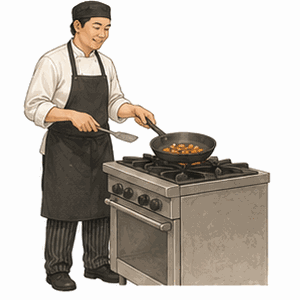
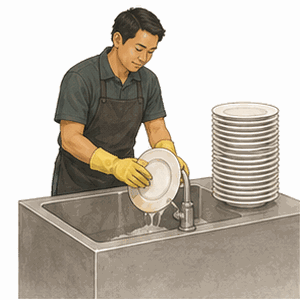
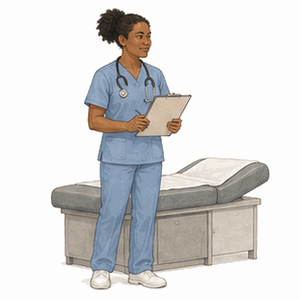
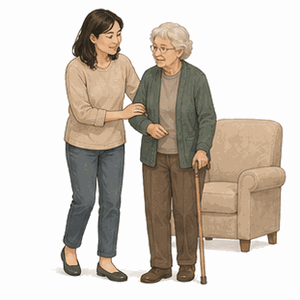
Four people from Job Words. One sentence each: now, but before.



★★★ Join them
Make one sentence. Keep every word. Add and or but.
andbut
- 1Sam can drive. + He can't cook.
- 2Ana can give first aid. + She can use a computer.
- 3Luis can cook. + He can bake.
- 4I can use a computer. + I can't type fast.
- 5She was a cashier. + Now she is a pharmacist.
- 6He can't drive. + He can't ride a bike.
- 7We can work weekends. + We can't work nights.
- 8They were drivers before. + Now they are teachers.
★★★ Ask with can
Watch can move. In a question it goes first. The answer repeats it.
The answer repeats can. Never use do with can.
★★★ Make it a question
Make it a question. Put can at the front. Type the whole question.
- 1She can sew.
- 2They can work nights.
- 3You can use a computer.
★★★ Fix the sentence
Each sentence is broken in one place. Keep every word and change only what is broken.
- 1He can cooks.After can, no -s.
- 2She can to drive.No to after can.
- 3I no can work nights.Not comes after can.
- 4I can drive, but I can cook.But needs something different.
- 5She was a cashier, but now is a pharmacist.Say the person again after but.
- 6Do you can drive?Not do. This verb asks with can.
For the teacher · Answer key